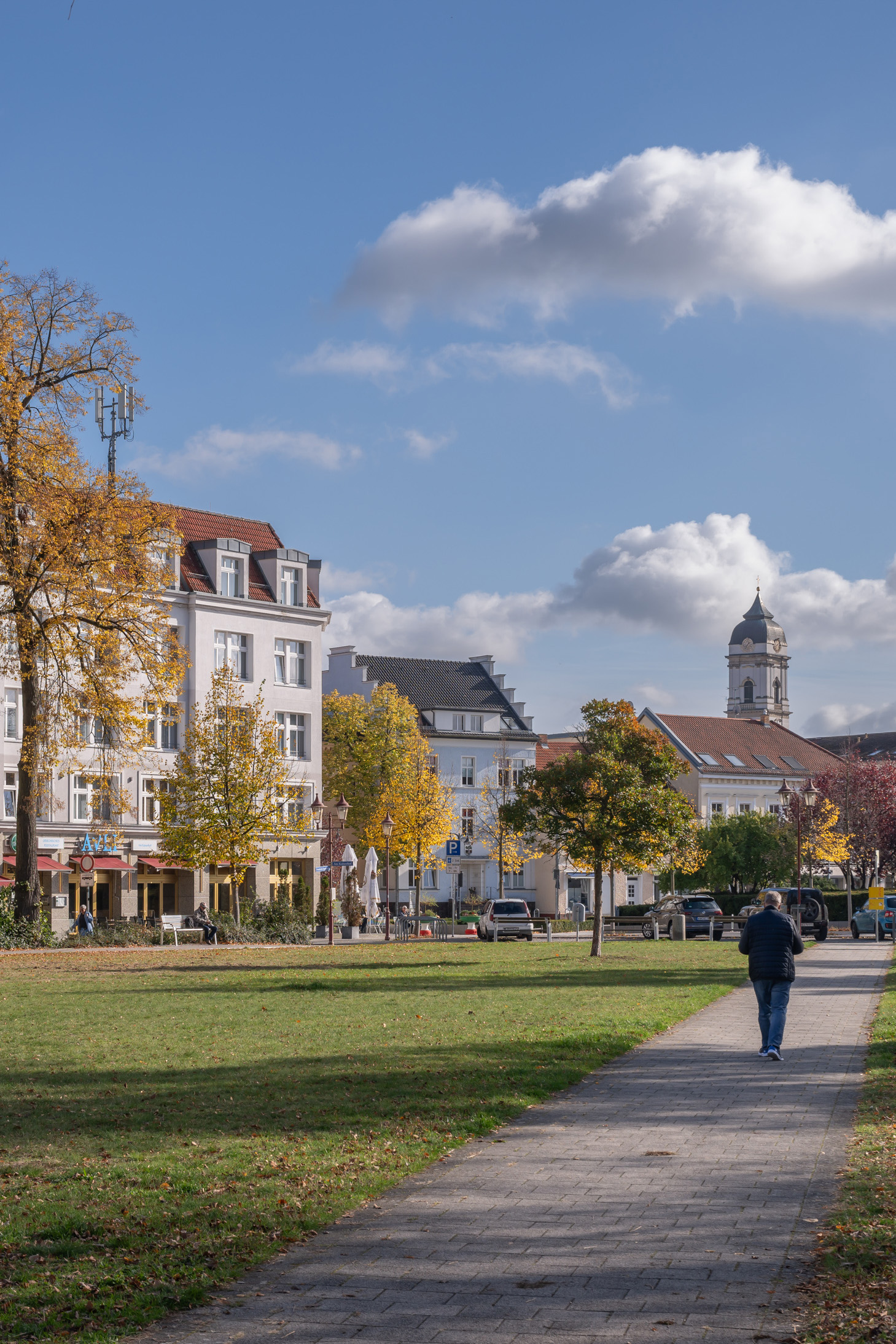
Growth in the capital region is increasingly shifting to a second ring around Berlin. By 2040, this area is expected to see a significant increase in population and thus become the new growth engine of the Berlin’s wider commuter belt. According to a recent population forecast by the Berlin-Brandenburg Statistical Office, reported by Die Welt last week, this trend suggests that demand for housing will no longer be driven solely by the municipalities immediately bordering Berlin but will increasingly shift towards more distant locations with good transport links.
According to the statisticians’ calculations, the second ring encompasses around 50 towns and municipalities with a current population of approximately 240,000. Among the most important locations are Fürstenwalde/Spree, Zossen and Nauen. By 2040, this area is expected to develop even more dynamically than Berlin’s established suburban belt. At the same time, experts anticipate that, in future, the second ring will account for the highest number of births. This suggests that families in particular are increasingly choosing these locations, whilst the municipalities immediately bordering Berlin are increasingly reaching the limits of their available land and development capacity.
This trend is based on the long-term population forecasts by the Berlin-Brandenburg Statistical Office. Overall, Brandenburg’s population is expected to grow slightly to around 2.57 million people by 2040, despite a continuing natural population decline. This is primarily due to positive net migration. At the same time, the various sub-regions of the state are developing very differently: whilst the Berlin catchment area is growing overall, numerous rural regions within the wider metropolitan area are expected to see population declines. Within the Berlin catchment area, however, the main centres of growth are increasingly shifting to municipalities further away from the capital.
This development is of considerable significance for the residential property market. It has already become apparent in recent years that rising property prices and a shortage of supply in Berlin are prompting many households to broaden their search area. Improved transport links, more flexible working arrangements and the desire for more living space are further reinforcing this trend. With the forecast population growth, this trend is now also gaining momentum from a demographic perspective. Municipalities with good transport links to Berlin, in particular, are therefore likely to become even more attractive to both owner-occupiers and investors.
At the same time, the forecasts highlight that demand for housing in the capital region will become even more regionally differentiated in future. Whilst Berlin and the immediately neighbouring municipalities continue to benefit from an influx of new residents, new development opportunities are now also emerging in the second ring. For project developers, investors and local authorities, long-term planning of housing, infrastructure and transport infrastructure – even beyond the traditional affluent suburbs – is therefore becoming increasingly important.